Uniform regulatory practices across India
ABOUT AIFORERA
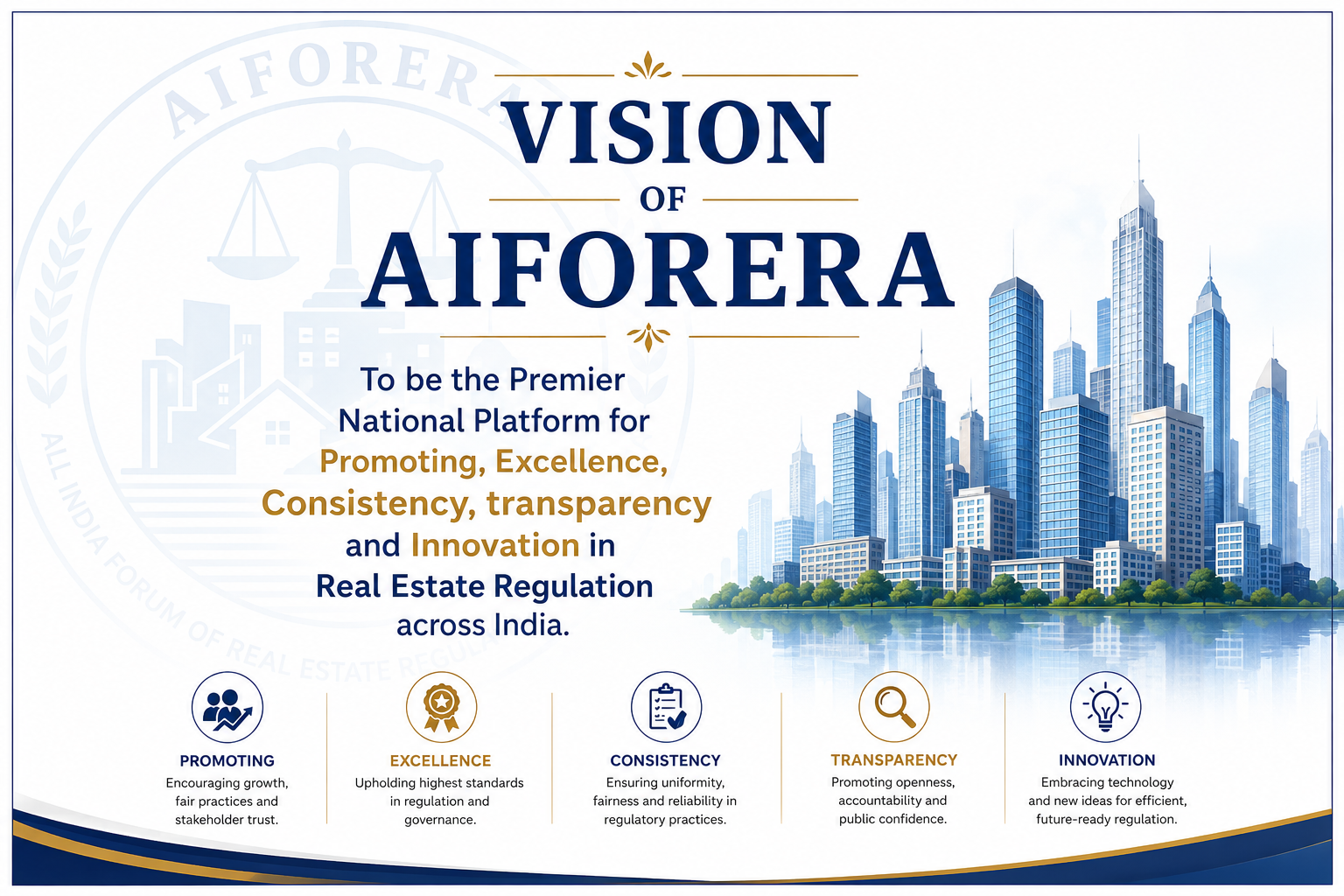
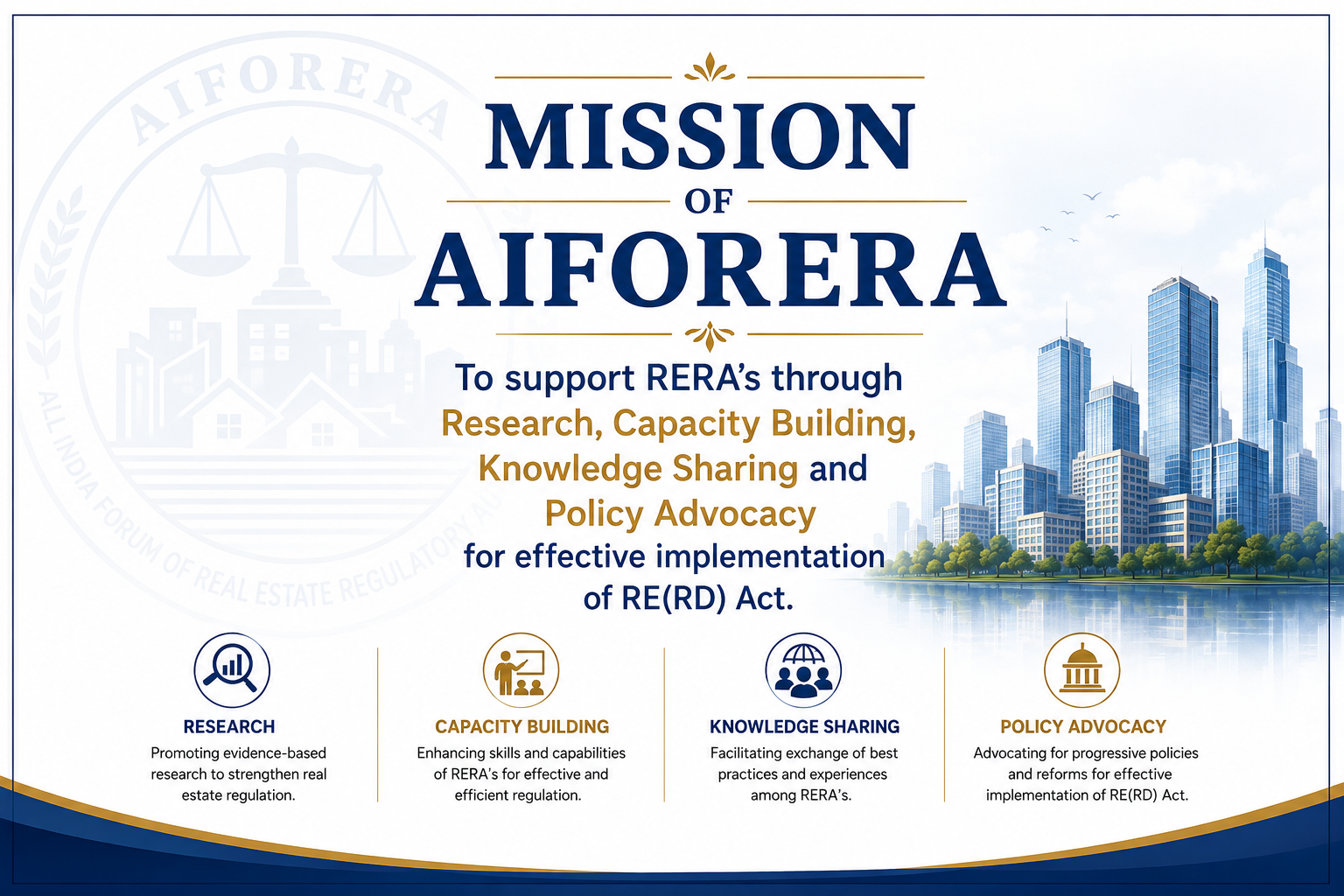
The All India Forum of Real Estate Regulatory Authorities (AIFORERA) is a prestigious national-level platform that brings together Real Estate Regulatory Authorities (RERAs) from across the states and Union Territories of India. Established with the vision of strengthening the effective implementation of the Real Estate (Regulation and Development) Act, 2016, AIFORERA plays a vital role in promoting transparency, accountability, consistency, and efficiency within the Indian real estate sector.
AIFORERA serves as a collaborative forum where different RERAs can work together to address common challenges, exchange ideas, share best practices, and develop coordinated strategies for better regulation and governance of the real estate industry. Through active cooperation among regulatory bodies, the organization aims to create a more transparent and consumer-friendly real estate ecosystem that safeguards the interests of homebuyers while also encouraging responsible and sustainable growth in the sector.

AIFORERA: A Collaborative Platform
AIFORERA is the apex forum representing Real Estate Regulatory Authorities from different States and Union Territories of India. It functions as a common institutional platform where RERAs collaborate to address challenges, exchange best practices, and develop consistent approaches for effective implementation of the RERA Act.
The forum promotes:
-
-
Consumer protection and transparency
-
Efficient dispute resolution mechanisms
-
Technological and administrative innovation
-
Coordination between regulatory authorities
AIFORERA plays a vital role in strengthening confidence in the real estate sector by encouraging fair and transparent governance.

Background
AIFORERA: A Facilitator in implementation in the act
Before the enactment of the RERA Act, India’s real estate sector faced several challenges such as project delays, lack of transparency, misleading advertisements, diversion of funds, and limited protection for homebuyers. Buyers often had no effective mechanism for grievance redressal, while regulatory practices varied significantly across states.
With the introduction of the Real Estate (Regulation and Development) Act, 2016, each State and Union Territory established its own Real Estate Regulatory Authority (RERA). However, differences in implementation, procedures, interpretation of rules, and enforcement methods created a need for a national-level coordination mechanism.

Objectives of AIFORERA
The primary objectives of AIFORERA are
Uniform Implementation of RERA
To promote consistency and harmonization in the implementation of the RERA Act across all States and Union Territories.
Consumer Protection
To strengthen the rights and interests of homebuyers through transparent and accountable real estate practices.
Coordination Among RERAs
To facilitate communication, cooperation, and exchange of best practices among various State RERAs.
Policy Development and Recommendations
To provide recommendations and suggestions to the Government for improving regulatory frameworks and enforcement mechanisms.
Capacity Building
To organize training programs, workshops, seminars, and conferences for enhancing the capabilities of regulatory authorities and stakeholders.
Promotion of Transparency
To encourage digital governance, public disclosure systems, and efficient regulatory processes within the real estate sector.

Role of State RERAs
Connected to AIFORERA
State Real Estate Regulatory Authorities (RERAs) are the primary regulatory bodies responsible for implementing the provisions of the RERA Act within their respective jurisdictions. AIFORERA works closely with these authorities to improve coordination and regulatory effectiveness.
Project Registration
Ensuring that all eligible real estate projects are registered before marketing or sale.
Regulation of Real Estate Agents
Registering and monitoring real estate agents to ensure ethical business practices.
Consumer Grievance Redressal
Providing a platform for homebuyers to file complaints and seek timely resolution of disputes.
Monitoring Project Compliance
Ensuring that developers comply with approved plans, timelines, financial regulations, and disclosure requirements.
Promoting Transparency
Making project-related information accessible to the public for informed decision-making.
Enforcement and Penalties
Taking regulatory action against violations of the RERA Act and ensuring compliance with orders and directions.
Importance of AIFORERA
AIFORERA plays a significant role in strengthening India’s real estate regulatory ecosystem.
National Coordination
It creates a unified platform for collaboration among all State and UT RERAs.
Standardization of Practices
It encourages consistency in procedures, regulations, and enforcement mechanisms across the country.
Improved Consumer Confidence
By promoting accountability and transparency, AIFORERA enhances trust among homebuyers and investors.
Better Governance
It contributes to efficient regulation, stronger compliance systems, and improved dispute resolution.
Sectoral Growth
A transparent and regulated real estate environment promotes sustainable growth, investment, and professionalism in the sector.
Major Challenges Faced by AIFORERA and RERAs
Despite significant progress, AIFORERA and State RERAs continue to face several challenges
Variations in State-Level Implementation
Different states may adopt different rules and procedures, leading to inconsistency in implementation.
Enforcement Difficulties
Ensuring compliance with RERA orders and recovery of penalties remains a major challenge.
Infrastructure and Resource Constraints
Some RERAs face shortages of manpower, technology, and administrative support.
Legal and Jurisdictional Issues
Complex legal disputes and overlapping jurisdictions with other laws and forums can affect regulatory efficiency.
Delays in Appointments and Operations
Vacancies in regulatory authorities and tribunals can slow down dispute resolution and decision-making processes.
Increasing Complexity of the Real Estate Sector
Rapid urbanization, evolving market practices, and emerging technologies require continuous regulatory adaptation.